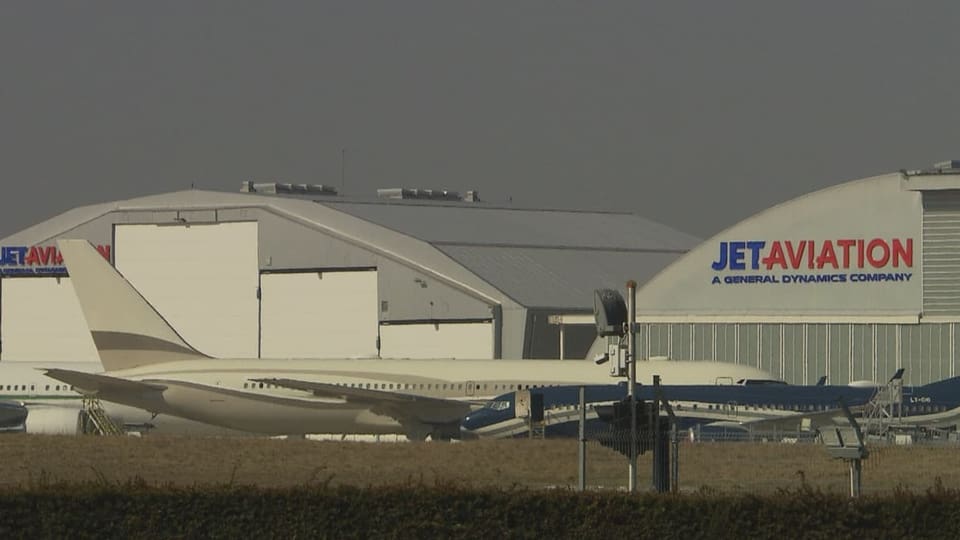
In March, the center of equipment in Basel was about 20 "Russian" jets, which the company suspended all work. In addition, Jet Aviation said that the project to customize the aircraft of one of the Russian persons under sanctions was stopped.
"We had to immediately stop working with these aircraft," said David Paddock, president of Jet Aviation, adding, "We are affected by a combination of sanctioned customers as well as Russian individuals, and we are clearly prohibited from doing business with both of these groups." We have several hundred Russian clients that we do not touch at all.
Due to U.S. export controls, the company is in most cases unable to obtain new parts for these aircraft. “For example, our subsidiary Gulfstream will not supply parts for Russian aircraft under sanctions or controlled by Russians, so we cannot install any parts or touch these aircraft, even if they are registered in the EU, UK or US,” he said. The same applies to our technical centers in Dubai and Singapore. The U.S. export control cap is global, Paddock said.
Those aircraft that were in the hangars of Jet Aviation at the time of the imposition of sanctions, removed and put on the platform. While some service providers may turn a blind eye to the complex process required to determine the ultimate owner of the aircraft they handed over, a subsidiary of General Dynamics takes its obligations seriously.
"What we've done over the past two months is work with all aviation regulators with our parent company with customers," Paddock said, adding that each case is being treated separately. The company also relies on the advice of its internal and external advisors, as well as on compliance resources from the Department of Commerce and the U.S. State Department.
Some of the aircraft, which are in Jet Aviation’s care at its facilities in Basel and Geneva, as well as Vienna, are in the process of being sold. “Either the bank will take the plane or the Russian owner will sell it,” Paddock said. “We are trying as much as possible to facilitate a legitimate transaction between a Russian seller and a non-Russian buyer, really considering the fact that otherwise this aircraft will be stationed at our facilities and no one will pay rent,” he said.
Under EASA rules, the service provider is allowed to perform maintenance on the aircraft while it's standing, but nothing that could "increase the value of the aircraft." Paddock said those planes are likely to remain on the ground for some time and that the situation his company faces is only a small part of what the industry is going through. "We are working with EASA, the FAA and the Swiss authorities on how we will be able to service these aircraft in the future," he said, adding that the matter was discussed at a recent GAMA board meeting.


