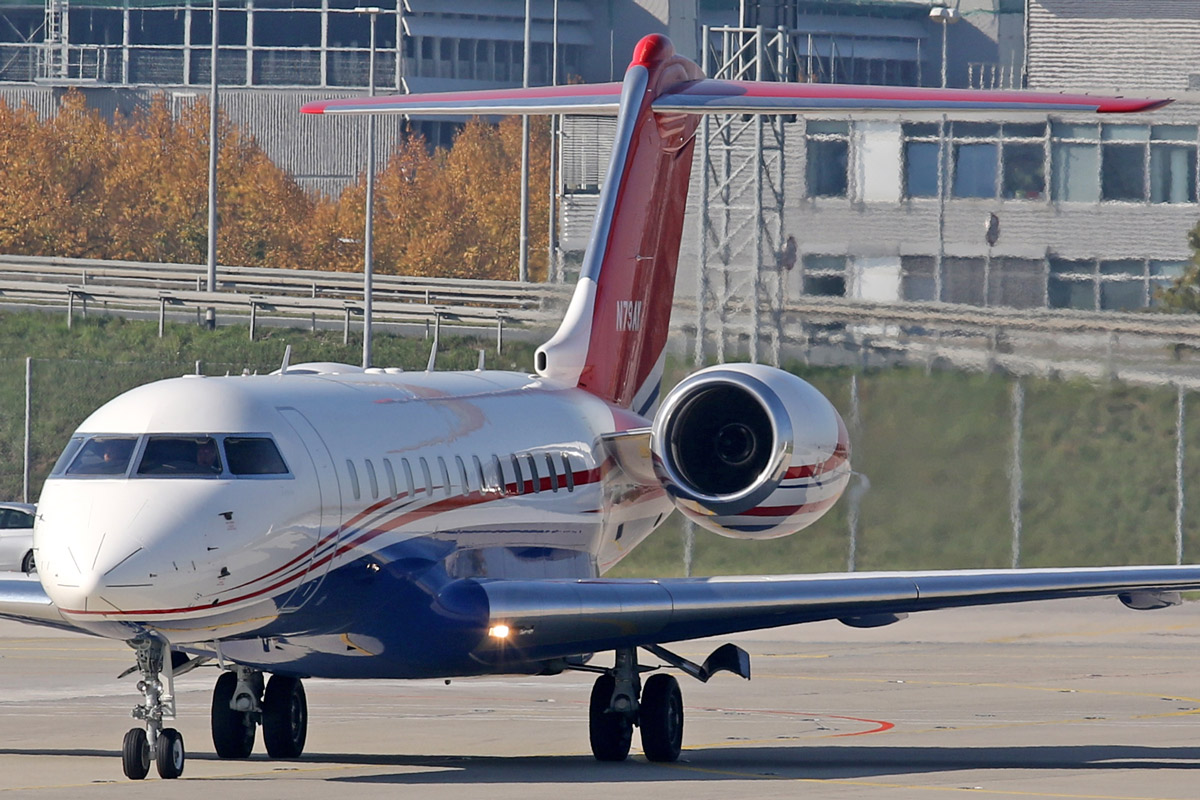
The ACJ defines heavy business jets as aircraft that can accommodate 12 to 14 passengers with a flight duration of 10 to 12 hours. This category accounts for 37.5% of the U.S. fleet.
California leads with 724 aircraft and a 13.21% share of the U.S. heavy business jet fleet. The Golden State is followed by Florida and Texas with 617 and 560 aircraft, respectively. New York and New Jersey have 303 and 258 aircraft in their fleets.
Sean McGuigh, vice president of ACJ North America, said: “The U.S. dominates the global heavy private jet market, and we expect this market to grow vigorously as the nation’s ultra-high-income population increases and large corporations grow.”
Los Angeles’ largest airport, Van Nuys, has the most aircraft registered: 206 jets, accounting for 3.76% of the U.S. heavy aircraft market. They are followed by Teterboro, New Jersey, and Dallas, Texas, with 161 and 157 aircraft respectively. Houston, Fort Lauderdale and Chicago have 137, 132 and 126 aircraft on permanent residence.
The total U.S. business jet fleet currently stands at 14,632 aircraft, or 62.5% of the global fleet. Heavy jets account for 37.5% of the U.S. fleet, followed by light jets at 36.5%, midsize jets at 20.5% and very light jets at 5.5%.
Speaking last month, McGeo said: "Because of the huge size of the U.S. and its importance on the world stage, more than a third of the private jets registered in the country are classified as heavy or ultra-long-range aircraft, which is what we're looking at." He added that many flight departments and fractional-ownership operators have already exceeded last year's traffic figures. The ACJ attributed the increase in demand to lifestyle changes following the global pandemic. A significant reduction in scheduled commercial flights has increased the number of new business aviation entrants.


